Can Adults Still Fix Their Bite? Understand Your Options Today
All-inclusive Dentistry in Indianapolis

Do You Ever Get a Nagging Feeling Every Time You Smile in a Meeting?
Maybe you recognize this moment: the team photo gets announced, or a client lunch turns into introductions around the table, and somewhere between standing up and smiling, you find yourself thinking about your teeth. Not in a dramatic way. Just that quiet, familiar awareness that something could feel off about your bite or the way your smile looks, and it might be something you've been meaning to address for a while now. It often gets pushed behind the next project deadline or the next quarter's priorities.
Some people notice their jaw feeling tight after long days, or certain foods becoming harder to chew comfortably. Others find themselves covering their mouth when they laugh, or avoiding photos altogether. These small adjustments, often made without realizing it, can signal bite issues that affect more than just appearance.
Adults can correct bite and alignment issues, and the options available today are more varied and less disruptive to a busy schedule than many people expect. We work with career-focused adults regularly who assumed they'd missed their window. Most discover they have more treatment options than they expected.
If you're curious where to start, clear aligner therapy tends to be one of the more flexible paths, and it's something we offer across our Indianapolis, Shelbyville, and Greenwood locations. Dr. Matthew Fraiz often tells patients that the biggest barrier isn't usually age or complexity. It's getting clear information about what your specific situation actually requires before making any commitments.
What You'll Learn
- Why bite problems affect more than just your smile and impact jaw health, headaches, and long-term costs
- The real differences between clear aligners, traditional braces, and more complex cases handled in-house
- How adult orthodontic treatment differs from teenage treatment and why adults often see better results
- Red flags that signal you should get a second opinion before committing to treatment
- What to expect during a bite evaluation and specific questions to ask about costs and timelines
A 'Bad Bite' Isn't Just About Looks
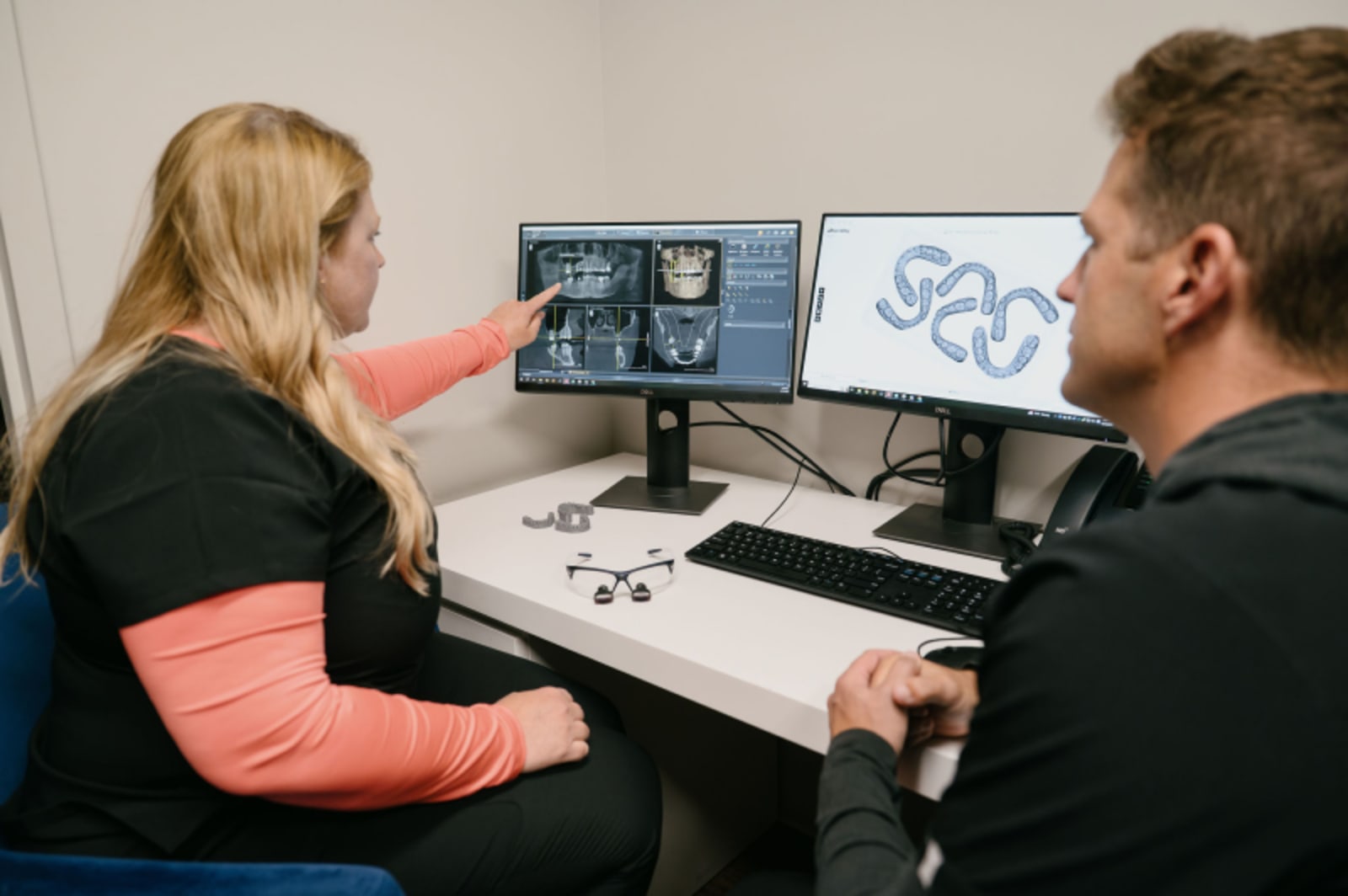
A bite problem, in clinical terms, means upper and lower teeth aren't meeting the way they should. This can manifest in several different ways:
- Crowding, where teeth don't have enough room and overlap or rotate
- An overbite or underbite, where one jaw protrudes further than the other
- A crossbite, where upper and lower teeth pass each other instead of meeting cleanly
- Spacing issues that leave gaps and shift pressure unevenly across teeth
None of these are purely cosmetic concerns. When a bite is misaligned, jaw muscles and joints constantly compensate, working harder than they should. Over time, this effort surfaces in ways people might not connect to their teeth: morning headaches, jaw tension, neck and shoulder soreness, or gradually developing grinding habits.
Uneven bite pressure concentrates on specific teeth, wearing down enamel faster in some spots and creating chips or sensitivity. Difficulty chewing certain foods signals that bite mechanics may be working against proper function.
For people experiencing any combination of these symptoms, especially if they've been gradually worsening, a bite evaluation can determine whether what they're feeling relates to alignment issues or something else entirely. Dr. Fraiz often tells patients that the goal isn't to convince them they need treatment, but to provide enough information for them to make the right decision for their situation.
The Options Adults Actually Have (And What Separates Them)
When it comes to orthodontic treatment for adults, the options fall into distinct categories, each addressing different problems at different levels of complexity.
Clear aligner therapy uses custom-fitted removable trays to gradually shift teeth into alignment. It is nearly invisible and fits into professional lifestyles without disruption. This approach works well for mild to moderate crowding, spacing issues, and certain bite concerns. The requirement is consistent wear throughout the day.
Traditional braces use brackets bonded to teeth, connected by wires that apply continuous pressure. They are not removable, which becomes an advantage for complex cases. When bite issues involve significant rotation, vertical movement, or back-tooth alignment, braces give providers more precise control. Treatment timelines run longer, but for complex cases they are often the stronger clinical choice.
Some situations require more than orthodontic movement. Adults with bite problems rooted in jaw structure, significant tooth loss, or extensive wear patterns benefit from comprehensive treatment planning that coordinates orthodontic work with dental implants or restorative care. Because we handle all of this in-house across our three locations, patients with more involved cases do not need to navigate referrals or coordinate between separate providers. The full picture gets addressed in one place, with providers who are already familiar with your dental history.
Understanding which category applies to your situation determines both the treatment approach and the timeline involved.
Why Adult Treatment Is Different From What You Remember
One of the most common questions we hear from adult patients is "Is it too late for me?" It isn't, but adult treatment does work differently than it did when you were a teenager, and understanding those differences tends to make the whole process feel less uncertain.
The assumption that orthodontic correction is something people either handled as a teenager or missed entirely is one of the most persistent myths in dentistry. Adult bone structure is denser and no longer growing, which means treatment timelines can be longer than they were for a 13-year-old. That is biology, not a barrier. Longer does not mean less effective. It means the planning has to be more precise.
Compliance matters enormously in orthodontic treatment, and adults tend to do well with it. Showing up to appointments consistently, following care instructions, and keeping track of retainers all contribute meaningfully to outcomes. These are areas where adult patients generally have an advantage over younger ones.
The real complexity with adult treatment is usually dental history rather than age. Adults often have existing work that affects how treatment gets planned:
- Crowns or bridges that cannot be moved like natural teeth
- Dental implants anchored to the jaw that do not shift with orthodontic pressure
- Missing teeth that have caused neighboring teeth to drift over time
- Prior extractions that changed spacing and bite dynamics
None of these factors disqualify someone from treatment. They are variables that require individualized planning. Because our team covers everything from orthodontics to restorative care under one roof, we can look at the full picture when evaluating adult patients and build a plan that accounts for their actual dental history rather than working around it.
When to Get a Second Opinion (And What to Watch For)
Questioning a dentist's recommendation isn't impolite. It's responsible. If a treatment plan feels like it came out of nowhere, or if it seems that a specific product is being pushed without a clear explanation of why it fits your situation, those concerns deserve attention.
This comes up frequently in our conversations with patients, especially around complex cases involving bite alignment, missing teeth, or treatment that coordinates multiple procedures. One of the reasons we've built our practice the way we have, with multiple providers and specializations under one roof, is so that patients don't have to wonder whether their dentist has seen enough cases like theirs. For involved bite cases or implant planning, that depth of experience matters, and it should be something any provider can speak to directly.
If you're evaluating a treatment plan, from us or anyone else, these situations warrant a closer look:
- The recommended treatment is extensive and wasn't mentioned at previous visits
- You weren't told why a specific approach was chosen over alternatives
- The timeline feels rushed or the explanation felt incomplete
- The provider seems uncomfortable with questions or rushes through answers
- Treatment recommendations change significantly between visits without clear explanation
Questions worth asking during any consultation: "What happens if I wait six months?" "What are the risks of this approach versus alternatives?" "How many of these procedures do you perform annually?" "Can you show me examples of similar cases you've treated?" A provider who welcomes those questions and answers them thoroughly is one worth trusting.
Patients who feel genuinely informed tend to make better decisions and have better outcomes. You can read through patient stories from our practice to get a sense of what that kind of transparency looks like in practice. Feeling informed isn't a luxury. It's what good care looks like.
What the Bite Evaluation Process Actually Looks Like
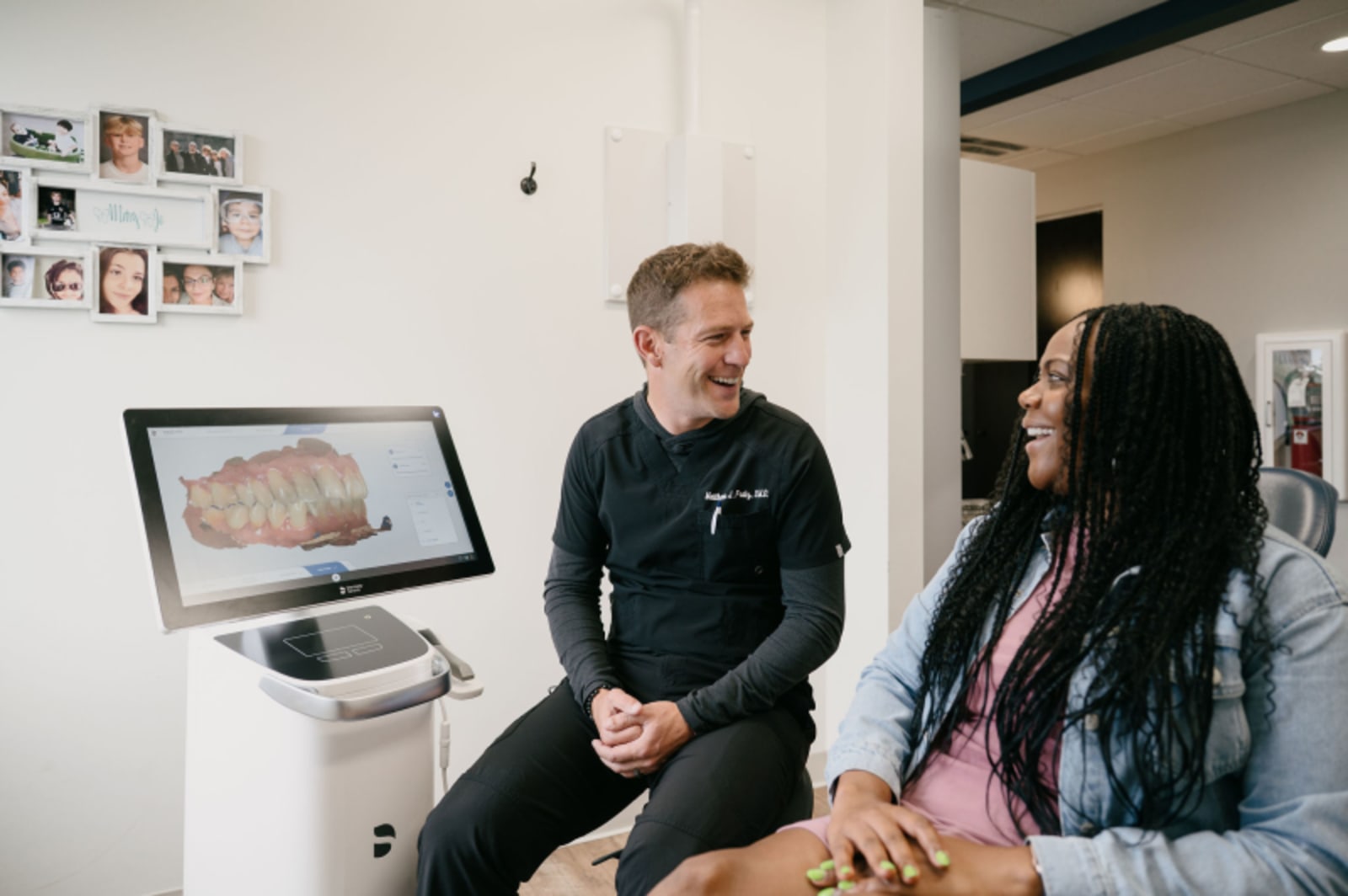
Understanding what the evaluation involves can help with scheduling decisions. A bite evaluation is a structured conversation backed by clinical observation, not a lengthy ordeal or a sales presentation.
During an appointment, the process generally involves a few core components:
- A visual examination of how teeth meet and how the jaw moves
- In-house imaging or scans when needed to see what is happening beneath the surface
- A conversation about symptoms, dental history, and treatment goals
That conversation often reveals the most useful information. We listen before recommending anything, and we typically ask about daily symptoms, previous dental work, and what outcomes matter most to you. Common topics include jaw pain, headaches, grinding habits, and how long alignment issues have been noticeable. Because our team handles everything in-house, any imaging findings can be reviewed and discussed during the same appointment rather than requiring a separate referral visit.
Helpful items to bring include insurance information, a list of current medications, and any previous dental records. Most evaluations take 30 to 45 minutes and include time for questions about findings and next steps.
Our patients consistently mention leaving these appointments with a clear picture of their situation and options. That clarity is something we work toward intentionally, because a well-informed patient makes better decisions for their own care.
Ready to Move Beyond Research?

If you're ready to understand what's possible for your specific situation, a consultation can provide the clarity research alone can't offer. Our team approaches these conversations with the understanding that bite correction affects both function and confidence.
Contact whichever location works best for your schedule:
- Indianapolis: (317) 872-3465
- Shelbyville: (317) 398-6399
- Greenwood: (317) 865-1193
To learn more about what other patients have experienced, you can read through patient stories about their treatment journeys and outcomes.

convenient
We invite you to enjoy trusted professionals, personalized treatment, and a great dental experience with three convenient locations to fit your life.

We can’t wait meet you
Request an appointment online to set up your first visit. We’ll be in touch soon.
schedule Appointment